movies

  • Subscribe to our RSS feed.
  • Twitter
  • StumbleUpon
  • Reddit
  • Facebook
  • Digg
Showing posts with label Stevens (George). Show all posts

Friday, June 20, 2014

Giant (1956) ***

Posted on 2:04 AM by Unknown

m5ekyljtzVQmBySwqcNWGAwgaHq

Giant (1956)—was there ever a more appropriately named Hollywood production?  And, I’m not just referring to its three hour and twenty-one minute runtime, either. Director George Stevens rightly earned his second Academy Award for Best Director by capturing the vast landscape and racial complexity of Texas, while coaxing out tremendous performances from his cast. 

giant_2Edna Ferber wrote novels and plays that Hollywood liked to turn into movies: So Big (1924, 1932, and 1953), Show Boat (1932, 1936 and 1951), Cimarron (1931 and 1960), Saratoga Trunk (1945), Stage Door (1937), Dinner at Eight (1933), and The Royal Family of Broadway (1930)—to name a few, although there are others. Published in 1952, Giant was Ferber’s tenth novel. Her critique of Texas race relations in the book scandalized the Lone Star state and caused quite a stir in the literary world. As controversy was good for the box office, just about every studio in Hollywood wanted to buy the rights to it, but only George Stevens made her an offer she couldn’t refuse: he made her a producer and promised to make a faithful film adaption of her novel. As it turns out, he made as faithful an adaption as he and Warner Brothers were willing to make.  Specifically, sections of the novel that dealt with African Americans and Jim Crow were cut altogether or amalgamated into the film’s discussion of racism against Mexican Americas.  Still, Fred Guiol and Ivan Moffat’s Oscar-nominated adapted screenplay was groundbreaking not only in its treatment of racism but also in its portrayal of class and gender issues.  The story, spanning the lives of Jordan (Rock Hudson) and Leslie Benedict (Elizabeth Taylor) over a period of twenty-five years, is the solid foundation on which Stevens’ greatest cinematic effort is based.  And, while it most assuredly could have been trimmed down a bit, as there are, admittedly, a few 0029427a_mediumscenes that could have been cut without the film missing a beat, it is still a spectacularly told story.

When Texas rancher, Jordan “Bick” Benedict, travels to Maryland to buy a feisty horse named War Winds he not only takes home a horse but its ornery, free-thinking owner, Leslie, as his wife. Somehow her straightforward critique of Texas history—Texans stole the land from the Mexicans—is overlooked by Bick—I’m sure her stunning beauty was the culprit.  Anyway, Leslie’s comfortable and lush, green world of Maryland is replaced by an endless landscape of dirt and dust and overbearing heat. She also has to deal with Bick’s unmarried, hard-as-nails sister, Luz (Mercedes McCambridge), who is threatened by Leslie’s presence.  When Leslie asserts her authority as the woman of the house, Luz takes out her anger on War Winds, who, thankfully, throws her from the saddle, which results in her death—problem bitch solved.  With Luz out of the way, the only thing that stands in Leslie’s way is racism, classicism, and sexism—all of which her husband displays throughout their marriage. How dare she treat their Mexican servants with respect or think that Mexicans should have decent places to live and proper medical care?  Why on earth would you be friendly and polite to a no-account farmhand like Jett Rink (James Dean)?  Giant pic 3And, how dare you attempt to discuss either business or politics with men?  To say the first few years of marriage are rocky for them would be an understatement. Yet, Leslie’s progressive ways, not to mention her red-hot sex appeal, have a way of tempering her husband’s moods.  So what if they fight a lot? As Leslie likes to say, the best thing about quarreling is the making up afterward—which yields a set of fraternal twins, Jordy (Dennis Hopper) and Judy (Fran Bennett), and a high-spirited daughter, Luz (Carroll Baker).  Of course, after awhile they start getting on each other’s nerves—especially after Bick is particularly traumatized by the fact that his son doesn’t like horses. As a result, Leslie returns to Maryland with children in tow, while Bick has time to reconsider home on the range—alone.  And, so he finally yields to his wife and goes after her and a certain understanding is agreed upon.  You’d think that’s where the story ends, but wait, that’s only the first third of the picture.

After Bick and Leslie’s reconciliation the film jumps ahead about fifteen years, where we find the couple fully engaged in the lives of their nearly grown children.  Obviously, Leslie’s free-thinking ways ruled the nursery, because all of their children do exactly the opposite of what their pa0020083d_mediumrents want them to.  Instead of taking over the ranch as his father demands, Jordy goes off to Harvard and then medical school, and eventually, God-forbid, marries a Mexican girl. Judy, for her part, disregards her mother’s desire that she go to a Swiss finishing school and attends Texas Tech, where she studies animal husbandry, and then elopes with a local ranch hand (Earl Holliman).  And, Luz…well, she becomes involved with the one absolute man that both her parents universally dislike: Jett Rink. By this time, Old Jett has struck it oil rich on the Benedict land that the first Luz left to him when War Winds snapped her neck. And while Jett and Uncle Sam might have convinced Bick to use his own ranch land for oil wells during World War II, Jett is still seen as a no-good son of a bitch by Bick and as a drunken manhandler by Leslie.  You see, Leslie knows that Jett wants Luz as a consolation for herself, but she can’t really say that to her daughter. With children like these, is it any wonder that both Leslie and Bick are fully gray after only twenty-five years of parenting?

Giant pic 1Okay, so let’s get this out of the way right now: contrary to popular opinion, James Dean is NOT the best thing about Giant. In my opinion, judgment of his performance is colored by the fact that he died a few weeks after his scenes wrapped and months before the movie was released.  Don’t get me wrong, he does an admirable job of playing an anti-social, ill-mannered non-conformist—the same role he pretty much played in all three of his films (East of Eden and Rebel Without a Cause being the other two)—but he is not what makes Giant tick. That responsibility rests solely on the delicate shoulders of Elizabeth Taylor, who finally was allowed to show that she was indeed a gifted, ADULT actress who deserved to be given substantial roles.  Stevens gave Hudson the choice of picking either Taylor or Grace Kelly as his leading lady in Giant.  For his part, Stevens didn’t think the 23-year-old Taylor had the emotional range required for Leslie and wanted Kelly for the role. Thankfully, Hudson chose Taylor—who, in my opinion, could act circles around Kelly.  It’s not easy playing a character who ages over twenty-five years during a movie, and especially when you are so highly regarded for your beauty, as Taylor was.  Yet, she expertly depicts the various periods of life her character encounters in the story. In the beginning, her Leslie is flirty and precocious but also a young woman who knows what she wants, namely Bick.  In the early stages of her marriage she comes off as caught between two worlds or selves—the woman Bick wants her to be and the woman she knows she is.  Leslie’s ability to stand up to her husband, and Texas for that matter, in a defiant but polite manner without appearing as a sort of Pollyanna or saint-like figure is a direct result of Taylor’s deft acting abilities. 

My two absolute favorite scenes in Giant take place in the Benedict’s bedroom. This is fitting, of course, because this is probably the one place that she always got her way.  The first scene follows the aftermath of her defiant speech to Bick and his friends about them being cavemen and Giant (1956) - spursthat women have enough sense to discuss politics and business.  When he comes up to the bedroom she pretends to be asleep but when he purposefully throws his boots on the floor to wake her up, she serenely pretends like she has forgotten her daring scene.  But he hasn’t, and so to appease him she apologizes for being rude to his friends, but that’s not enough for Bick and he says, “I'm asking you right now when you are gonna settle down and behave like everybody else.” Her answer of “never” sends him toward the adjoining room, where he plans to sleep.  But Leslie knows how to control Bick and she simply says, “You knew what a dreadful girl I was when you married me. I did not deceive you, sir. From the first moment I couldn’t have been more unpleasant,” and then she just sits there staring at him smoldering with unbridled sexuality.  The next morning, having completely decimated all of her husband’s strength by her wanton ways, she casually mentions, oh by the way, that she’s pregnant. 

The second memorable bedroom scene isn’t based on sex, though. No, this one is all about a class that all successfully married people eventually graduate from: Spouse Psychology 101. Nope, by the time the Benedict’s are approaching middle age and sleeping in twin beds, Leslie can’t really rely on sex to impose her will on Bick anymore. Instead, when he believes he is manipulating her into agreeing to allow their daughter not to go to school in Switzerland but in Texas by saying, “I wonder if we love them enough to do what's really right for them,” Leslie knows what he’s doing and lets him have just enough rope to hang himself before dropping the hammer by informing him to brace himself because there’s another sacrifice to be made: Jordy wants to go to Harvard and then Columbia medical school. Priceless…and all done in the comfort of her twin bed.

giantFor its time, the film’s straightforward look at racism against Mexicans was rather bold—not as bold as it was in the novel, but still bold nonetheless. However, Leslie’s insistence that Mexicans be treated with dignity isn’t necessarily the same as saying that they deserve to be treated as equals, either. Still, by the end of the movie, when Bick gets his ass kicked by a racist diner owner who makes comments about his daughter-in-law and grandson, it is clear that Stevens is making a statement about racism in general, when he has the diner owner toss a sign on Bick which reads: “We reserve the right to refuse service to anyone”.  Was it an all-out attack on Jim Crow? No, but at least it was a start.

Overall, Giant is an entertaining film that dares to take on such things as racism, classism and sexism.  While it would have benefitted from a bit more editing, fine performances from Elizabeth Taylor, Rock Hudson, and James Dean elevate the overall effectiveness of the movie.  In particular, Taylor is mesmerizing as Leslie—how on earth she wasn’t nominated for a Best Actress Oscar is beyond me.

Read More
Posted in ***, 1956, Stevens (George) | No comments

Tuesday, March 18, 2014

Gunga Din (1939) **

Posted on 11:37 PM by Unknown

gunga_din_xlg

Director George Stevens’ Gunga Din (1939) is a product of its time.  Loosely based on the Rudyard Kipling poem of the same name, this 75-year old film celebrates British colonialism in a strangely uneven way.  At times, it is a buddy comedy and at other times it is a serious action/war picture—as such, it is difficult to pigeonhole it into a particular genre.  The film itself is not bad, but its plot has not aged well and can be off-putting to some.

Set in the Hindu Kush region of India, circa 1880, the British are dealing with a local murder cult known as the Thuggee who are also freedom fighters.  When the Thuggee murder an entire outpost and disable the telegraph line, three sergeants are asked to lead a small group of soldiers to investigateclipboard02uz8 and repair the telegraph.  Sergeant Cutter (Cary Grant) is a cockney soldier always on the lookout for a get rich quick scheme, usually in the form of buried treasure. Sergeant MacChesney (Victor McLaglen) is the leader of the group, who has a fondness for elephants. And, Sergeant Ballantine (Douglas Fairbanks, Jr.) is counting the days until his discharge so he can get married (to Joan Fontaine) and go into the tea business. It’s obvious the three men are great friends, but the prospect of Sergeant Ballantine leaving the group to get married causes both friction and joviality in the story. 

There are many reasons why Gunga Din has not aged well. First, an American film celebrating British colonialism in a post-colonial world is very rarely viewed fondly. Second, most, if not all, of the Indians are played by white men wearing body paint.  You add this irritating detail to the fact that Gunga Din (Sam Jaffe) sacrifices himself for the British gunga116army at the cost of the lives of his countrymen and you can’t help but cringe.  Furthermore, after allowing the Guru (Eduardo Ciannelli) to give a rather impassioned speech about how old and accomplished India is compared to that of Britain, screenwriters Ben Hecht, Charles MacArthur, Joel Sayre, and Fred Guiol then portray him as a complete madman.  Additionally, when one considers that the Indian people were, for the most part peacefully, trying to extricate themselves of British rule in 1939, led by Gandhi, a picture glorying the bravery and might of the British army seems a tad insensitive. 

The overall atmosphere of Gunga Din doesn’t abate the movie’s overall insensitivity, either. Had the film been a more focused, dramatic look at the conflict between the British and the Thuggee, it may have been more palatable.  Instead, Stevens jumps back and forth between seriousness and inanity.  While it was great to hear Grant’s natural cockney accent, his screwball Annex-Grant-Cary-Gunga-Din_06antics throughout the film are grating to say the least.  And, while one can’t complain about anything that celebrates the bonds of soldiers, there is a fine line between showcasing and ridiculing such bonds. Gunga Din does not traverse this line well, and, as such, there is an uneven feel to the overall production.  Had the film been more focused, and the runtime cut by about 15 to 20 minutes, I think I would have enjoyed it, even with its insensitive message, a lot more than I did.

Gunga Din did earn one Academy Award nomination for Best Black and White Cinematography (Joseph H. August), which was probably the best thing about it.  Shooting massive battle scenes in the middle of the Sierra Nevada and Alabama Hills and then trying to pass them off as having taken place in the Khyber Pass was no small feat, but August and Stevens pulled it off.  Still, this is not enough to make this a must-see film, either.

Read More
Posted in **, 1939, Stevens (George) | No comments

Tuesday, June 1, 2010

Swing Time (1936) **

Posted on 12:06 AM by Unknown

swing

If you don’t think Top Hat is the best Fred and Ginger film ever, then chances are you think that honor belongs to Swing Time. To many it is a toss up. I, of course, prefer Top Hat, but there are many who say Swing Time is better. In regards to political correctness, Top Hat is the one that stands the test of time, as Astaire performs in blackface in Swing Time. So, let the debate begin…once I give this film the once over, of course.

Based on the Elwin Gelsey story “Portrait of John Garnett” (screenplay adaptation by Howard Lindsay and Allen Scott), the film was directed by George Stevens (he needed a break—he’d just finished working with Katharine Hepburn). The charming dance numbers are the beneficiary of an excellent soundtrack by Jerome Kern and Dorothy Fields. “The Way You Look Tonight” took home the 1936 Oscar for Best Song and Hermes Pan was nominated for Best Dance Direction for “Bojangles of Harlem”. Besides these two great routines, there is also “A Fine Romance”, “Pick Yourself Up”, “Waltz in Swing Time”, and “Never Gonna Dance”.

The plot is very thin, but thankfully Fred and Ginger’s dancing make you forget this. Astaire plays John “Lucky” Garnett, a vaudeville “hoofer” who wants to be a professional gambler. He also wants to marry his rich girlfriend Margaret (Betty Furness), but he and his wedding trousers are sidetracked by his dancing partners who don’t want him to quit the business. He arrives hours late to the wedding and is informed by Margaret’s father, Judge Watson (director George Stevens’ father Landers Stevens) that there isn’t going to be a wedding. Lucky and the judge then come to an agreement: if Lucky goes to New York City and makes $25,000 then the judge will reconsider.

127543134_fd2ce7b843_o So, off to the big city goes a broke Lucky, his lucky quarter, and his best pal, Pop (Victor Moore). Once in New York they soon meet Penny Carol (Rogers), who promptly tries to have them arrested for theft. Lucky is still in his wedding clothes, so the officer doesn’t believe her. Miffed, Penny strides off to her job at the Gordon’s Dancing Academy with Lucky in hot pursuit. Upon entering the studio Lucky encounters receptionist Mabel (Helen Broderick), who offers him a free dance lesson in hopes that he’ll enroll in a $45 course. Seeing Penny’s picture on the wall, he asks to take his free lesson with her. An infuriated Penny must endure his faked ineptitude, which leads to the film’s first musical number, SwingTime_2 “Pick Yourself Up”. Many critics have said this song was a nod to people trying to endure the Depression. With lyrics like: “Don't lose your confidence if you slip/Be grateful for a pleasant trip/And pick yourself up/Dust yourself off/ Start all over again” it is easy to see where they may have gotten that idea. When Penny is fired by the dance studio’s owner, Mr. Gordon (Eric Blore), for insulting him, Lucky steps in and shows off what he’s “learned” from Penny. In a fluid shot, Stevens captures the duo as they do their famous swinging twirl and leap over the dance railings. Mr. Gordon is so impressed that he decides to send the duo to his friend Simpson’s (Pierre Watkin) Silver Sandal club for an audition. To get a dinner jacket for the audition, Lucky tries to gamble but ends up losing his pants in the process. No audition and Penny is yet again angry with him.

soap Fast forward a bit and you find Lucky and Pop picketing outside Penny’s room. With the help of Mabel, Lucky finds his way into her room and tries to convince her to give him (and their dance partnership) another shot. And what’s the best way to convince an angry woman to reconsider slicing your heart open with her stiletto? You serenade her with “The Way You Look Tonight”. Penny, soapy hair and all, forgives him and agrees to a new audition. Too bad Ricardo (George Mataxa), the band leader at the Silver Sandal, is in love with Penny and won’t play for the swingtime_lduo because he’s jealous of Lucky and because his contract now belongs to Dice Raymond (John Harrington), another night club (and casino) owner. So, Lucky gambles Dice Raymond for Ricardo’s contract—and wins. The first musical piece he conducts for his new boss is “Waltz in Swing Time”. This waltz is definitely in “swing time”, as it is lighting fast with Astaire and Rogers doing some very nimble foot work and interesting gliding back kicks, amongst their usual twirls. It is a breathtaking dance, both figuratively and literally.

swingtimea Later in the film the duo travel with Pop and Mabel (an odd couple if there ever was one) to a rundown lodge. It is the middle of a snowy winter and they are driving in an open convertible—really? Of course, by this point in the film Penny and Lucky are in love, but he’s giving her advances the brush-off because of his engagement to Margaret. Having all of her romantic advances rebuffed is too much for Penny and she begins singing “A Fine Romance”. The song is very sarcastic and well, cute: she wants them to be hot tomatoes and he wants them to be cold potatoes. Eventually, Pop lets her in on the fact that Lucky is engaged—just as Lucky decides to give in to his feelings.

Back in the city they begin performing at the swingtimeblackfaceSilver Sandal and continue their flirtation. It is at this point in the film that today’s viewer may become a bit uncomfortable, as Astaire performs in blackface in "Bojangles of Harlem". What today’s viewer doesn’t know is Astaire did this as a tribute to the African American tap dancer Bill Robinson. It is an excellent solo number for Astaire and the set design was inspired. boja Tap dancing amongst twenty four singing chorus girls dressed in half black and half white, Astaire showcases his wonderful tap work. Later in the number, Astaire performs a shadow dance amongst three screen projected shadows and outduels (or better yet, out-taps) them all. This is the only time he ever did a blackface number in a film. Anyway, at the end of the number Lucky notices that Margaret is in the audience. Uh-oh.

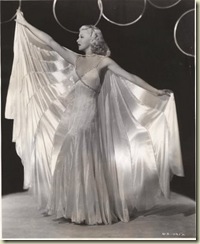
In a very quick amount of time a lot happens. Lucky loses Ricardo’s contract to Dice and Penny is introduced to Margaret. Both of these events convince Penny that she should marry Ricardo and finally be done with the gambling (and engaged) Lucky. swing-time-never-gonna-dance-1 When Lucky learns that Penny is going to marry Ricardo he convinces her to have one last dance with him when he starts singing “Never Gonna Dance”. This is perhaps the most “emotional” dance the duo ever performed together. As long as they continue this dance their romance can go on, but if the dance ends so does the romance. And, so this is one of the longest numbers the duo ever performed together. All of their earlier dance routines are intermingled with Ginger Swing Time Dress this one. It is awesome to watch this, as well as when they spin their way up a curved staircase and end the number in what can only described as an explosion of twirls. At the end, she runs away from him. It is rather devastating to watch…but then you remember it’s Fred and Ginger: I know there’s a happy ending somewhere! Okay, but we still must talk about Ginger’s dress in this number. Ten trillion times better than the Ostrich number Ginger Rogers majesticfrom Top Hat, this low-cut, white satin gown was designed by Bernard Newman and it is one of the all-time greatest film gowns EVER! With cross-your-heart pleats and a cut to die for, not to mention a startling cape that was connected by a rhinestone choker, this is the ultimate “I’m just too damn sexy” dress.

But back to the story, in the end Margaret tells Lucky she doesn’t want to marry him, which frees him up to steal Ricardo’s pants before his wedding to Penny. In a rather quirky, but very sweet, ending, the two end up serenading one another with the other’s song, he sings her “A Fine Romance” and she sings his “The Way You Look Tonight”.

This is my second favorite Fred and Ginger picture. It is a lot like Top Hat, especially with the art deco set designs and the usual plot devices. I don’t know if I can make a definitive statement as to which number, “Cheek to Cheek” or “Never Gonna Dance”, is the greatest. Both are spectacular, but Ginger does wear that itchy ostrich dress in “Cheek to Cheek”. Oh, well, I’d like to hear what you think on this subject…and anything else you might have to add.

Read More
Posted in **, 1936, Stevens (George) | No comments
Older Posts Home
Subscribe to: Posts (Atom)

Popular Posts

  • Mishima: A Life in Four Chapters (1985) **
    On the morning of November 25, 1970, Yukio Mishima (Ken Ogata) was recognized as Japan’s greatest modern writer. By the end of the day he w...
  • Slacker (1991) :(((
    I graduated from high school the year director Richard Linklater’s Slacker (1991) came out.  I unequivocally knew no one who resembled the ...
  • Dodsworth (1936) **
    (This is my contribution to the Mary Astor Blogathon, hosted by Tales of the Easily Distracted and Silver Screenings. Please follow this lin...
  • To Kill a Mockingbird (1962) **1/2
    Who doesn’t wish their father was a little bit (or maybe a lot) like Atticus Finch (Gregory Peck)? Kind, soft-spoken, principled, honorable...
  • Sunset Boulevard (1950) ***
    Before there was The Artist (2011) there was director Billy Wilder’s Sunset Boulevard (1950). Both movies shine a very bright light on ...
  • The Crowd (1928) **1/2
    We are born just like everyone else, right? So, why do we always think we are "special"? That’s the question director King Vidor ...
  • Grave of the Fireflies (Hotaru No Haka) 1988 **
    Suffice to say, Japanese animation would have made Walt Disney both proud and sad at the same time.  Aesthetically beautiful, but just so d...
  • The Mortal Storm (1940) ***
    Released more than one year before Pearl Harbor, director Frank Borzage’s The Mortal Storm (1940) was a Hollywood rarity—it openly critici...
  • Ninotchka (1939) ****
    When MGM marketed director Ernst Lubitsch’s political satirical 1939 comedy, Ninotchka , they used the catchphrase, “Garbo laughs”. While G...
  • Daybreak (Le jour se lève) 1939 **
    There are two important, though strange, reasons why director Marcel Carné’s Le jour se lève ( Daybreak , 1939) is still considered an imp...

Categories

  • :(((
  • *
  • **
  • ***
  • ****
  • ***1/2
  • **1/2
  • *1/2
  • 1902
  • 1903
  • 1915
  • 1916
  • 1919
  • 1920
  • 1921
  • 1922
  • 1923
  • 1924
  • 1925
  • 1926
  • 1927
  • 1928
  • 1929
  • 1930
  • 1931
  • 1932
  • 1933
  • 1934
  • 1935
  • 1936
  • 1937
  • 1938
  • 1939
  • 1940
  • 1941
  • 1942
  • 1943
  • 1944
  • 1945
  • 1946
  • 1947
  • 1948
  • 1949
  • 1950
  • 1951
  • 1953
  • 1954
  • 1955
  • 1956
  • 1957
  • 1959
  • 1960
  • 1962
  • 1963
  • 1964
  • 1965
  • 1966
  • 1967
  • 1968
  • 1969
  • 1970
  • 1971
  • 1972
  • 1973
  • 1975
  • 1976
  • 1977
  • 1978
  • 1979
  • 1980
  • 1981
  • 1982
  • 1983
  • 1985
  • 1986
  • 1987
  • 1988
  • 1989
  • 1991
  • 1992
  • 1993
  • 1994
  • 1995
  • 1996
  • 1998
  • 1999
  • 2000
  • 2002
  • 2004
  • 2005
  • 2006
  • 2007
  • 2010
  • 2011
  • 2012
  • Akerman (Chantal)
  • Aldrich (Robert)
  • Aleksandrov (Grigori)
  • Alfredson (Tomas)
  • Allen (Woody)
  • Antonioni (Michelangelo)
  • Arbuckle (Fatty)
  • Argento
  • Arliss (Leslie)
  • Aronofsky (Darren)
  • Arzner (Dorothy)
  • Bacon (Lloyd)
  • Beauvois (Xavier)
  • Becker (Jacques)
  • Bergman (Ingmar)
  • Berkeley (Busby)
  • Bertolucci (Bernardo)
  • Bigelow (Kathryn)
  • Blystone (John G.)
  • Borzage (Frank)
  • Brown (Clarence)
  • Browning (Tod)
  • Bruckman (Clyde)
  • Buñuel (Luis)
  • Camus (Marcel)
  • Capra (Frank)
  • Carné (Marcel)
  • Carpenter (John)
  • Chaney (Lon)
  • Chang Cheh
  • Chaplin (Charles)
  • Christensen (Benjamin)
  • Clair (René)
  • Clark (Bob)
  • Cleese (John)
  • Cline (Edward F.)
  • Clouse (Robert)
  • Cocteau (Jean)
  • Coen Brothers
  • Cooper (Merian)
  • Crichton (Charles)
  • Crosland (Alan)
  • Cukor (George)
  • Curtiz (Michael)
  • de Antonio (Emile)
  • Demy (Jacques)
  • Dieterle (William)
  • Dmytryk (Edward)
  • Donen (Stanley)
  • Dovzhenko (Aleksandr)
  • Dreyer (Carl Theodor)
  • Dulac (Germaine)
  • Duvivier (Julien)
  • Eisenstein (Sergei M.)
  • Fellini (Federico)
  • Feuillade (Louis)
  • Fincher (David)
  • Flaherty (Robert J.)
  • Fleming (Victor)
  • Ford (John)
  • Fosse (Bob)
  • Frankenheimer (John)
  • Friedkin (William)
  • Gance (Abel)
  • Garnett (Tay)
  • Gibson (Mel)
  • Godard (Jean-Luc)
  • Griffith (D.W.)
  • Guitry (Sacha)
  • Haines (Randa)
  • Hamilton (Guy)
  • Haneke (Michael)
  • Hathaway (Henry)
  • Hawks (Howard)
  • Hazanavicius (Michel)
  • Herzog (Werner)
  • Hill (George Roy)
  • Hitchcock (Alfred)
  • Hooper (Tom)
  • Howe (J.A.)
  • Huston (John)
  • Ivory (James)
  • Jeunet (Jean-Pierre)
  • Jewison (Norman)
  • Jonze (Spike)
  • Julian (Rupert)
  • Kachyňa (Karel)
  • Kazan (Elia)
  • Keaton (Buster)
  • Keighley (William)
  • Kelly (Gene)
  • Kershner (Irvin)
  • Kieslowski (Krzysztof)
  • Kim (Sang-jin)
  • Kim Ki-duk
  • King Hu
  • Kubrick (Stanley)
  • Kurosawa (Akira)
  • La Cava (Gregory)
  • Lang (Fritz)
  • Laughton (Charles)
  • Lean (David)
  • Lee (Ang)
  • Lee (Spike)
  • Leone (Sergio)
  • LeRoy (Mervyn)
  • Linklater (Richard)
  • Lloyd (Frank)
  • Lubitsch (Ernst)
  • Luhrmann (Baz)
  • Lumet (Sidney)
  • Luske (Hamilton)
  • Ma-Xu Weibang
  • Mamoulian (Rouben)
  • Mankiewicz (Joseph L.)
  • Mann (Anthony)
  • Marshall (George)
  • Maysles Brothers
  • McCarey (Leo)
  • McLeod (Norman Z.)
  • McQueen (Steve)
  • Méliès (Georges)
  • Melville (Jean -Pierre)
  • Mendes (Sam)
  • Menzies (William Cameron)
  • Meyer (Russ)
  • Micheaux (Oscar)
  • Milestone (Lewis)
  • Minnelli (Vincent)
  • Mizoguchi (Kenji)
  • Moland (Hans Petter)
  • Morris (Chris)
  • Mulligan (Robert)
  • Murnau (F.W.)
  • Nichols (Mike)
  • Nolan (Christopher)
  • Olivier (Laurence)
  • Ophüls (Max)
  • Osten (Franz)
  • Ozu (Yasujiro)
  • Pabst (Georg Wilhelm)
  • Pagnol (Marcel)
  • Peckinpah (Sam)
  • Peixoto (Mario)
  • Peli (Oren)
  • Petersen (Wolfgang)
  • Polanski (Roman)
  • Ponting (Herbert G.)
  • Porter (Edwin S.)
  • Powell and Pressburger
  • Preminger (Otto)
  • Pudovkin (Vsevolod)
  • Raimi (Sam)
  • Redford (Robert)
  • Reed (Carol)
  • Reggio (Godfrey)
  • Reiniger (Lotte)
  • Reisner (Charles)
  • Renoir (Jean)
  • Resnais (Alain)
  • Riefenstahl (Leni)
  • Robinson (Bruce)
  • Robson (Mark)
  • Rossellini (Roberto)
  • Sandrich (Mark)
  • Sayles (John)
  • Schoedsack (Ernest B.)
  • Schrader (Paul)
  • Scorsese (Martin)
  • Scott (Ridley)
  • Seiter (William A.)
  • Sharpsteen (Ben)
  • Sheridan (Jim)
  • Sherman (Lowell)
  • Sirk (Douglas)
  • Sjöström (Victor)
  • Sluizer (George)
  • Smith (Jack)
  • Spielberg (Steven)
  • Stevens (George)
  • Sturges (Preston)
  • Takahata (Isao)
  • Tati (Jacques)
  • Taviani Brothers
  • Téchiné (André)
  • Tourneur (Jacques)
  • Ulmer (Edgar G.)
  • Van Dyke (W.S.)
  • Varda (Agnes)
  • Vertov (Dziga)
  • Vidor (Charles)
  • Vidor (King)
  • Vigo (Jean)
  • von Sternberg (Josef)
  • von Stroheim (Erich)
  • Waggner (George)
  • Walsh (Raoul)
  • Weir (Peter)
  • Welles (Orson)
  • Wellman (William A.)
  • Whale (James)
  • Wiene (Robert)
  • Wilde (Ted)
  • Wilder (Billy)
  • Wise (Robert)
  • Wood (Sam)
  • Wyler (William)
  • Yonggang (Wu)
  • Zwerin (Charlotte)

Blog Archive

  • ▼  2014 (43)
    • ▼  July (4)
      • Voyage to Italy (Viaggio in Italia) 1953 **
      • An American in Paris (1951) **
      • Jeanne Dielman, 23, Quai du Commerce, 1080 Bruxell...
      • Guys and Dolls (1955) **1/2
    • ►  June (22)
    • ►  May (4)
    • ►  April (2)
    • ►  March (4)
    • ►  February (4)
    • ►  January (3)
  • ►  2013 (69)
    • ►  December (2)
    • ►  October (6)
    • ►  September (7)
    • ►  August (6)
    • ►  July (7)
    • ►  June (7)
    • ►  May (6)
    • ►  April (7)
    • ►  March (7)
    • ►  February (7)
    • ►  January (7)
  • ►  2012 (59)
    • ►  December (2)
    • ►  November (3)
    • ►  October (4)
    • ►  September (10)
    • ►  August (5)
    • ►  July (3)
    • ►  June (5)
    • ►  May (1)
    • ►  April (4)
    • ►  March (8)
    • ►  February (5)
    • ►  January (9)
  • ►  2011 (54)
    • ►  December (1)
    • ►  November (3)
    • ►  October (6)
    • ►  September (3)
    • ►  July (1)
    • ►  April (3)
    • ►  March (12)
    • ►  February (14)
    • ►  January (11)
  • ►  2010 (86)
    • ►  December (2)
    • ►  November (5)
    • ►  October (2)
    • ►  August (1)
    • ►  July (3)
    • ►  June (5)
    • ►  May (6)
    • ►  April (3)
    • ►  March (2)
    • ►  February (2)
    • ►  January (55)
Powered by Blogger.

About Me

Unknown
View my complete profile